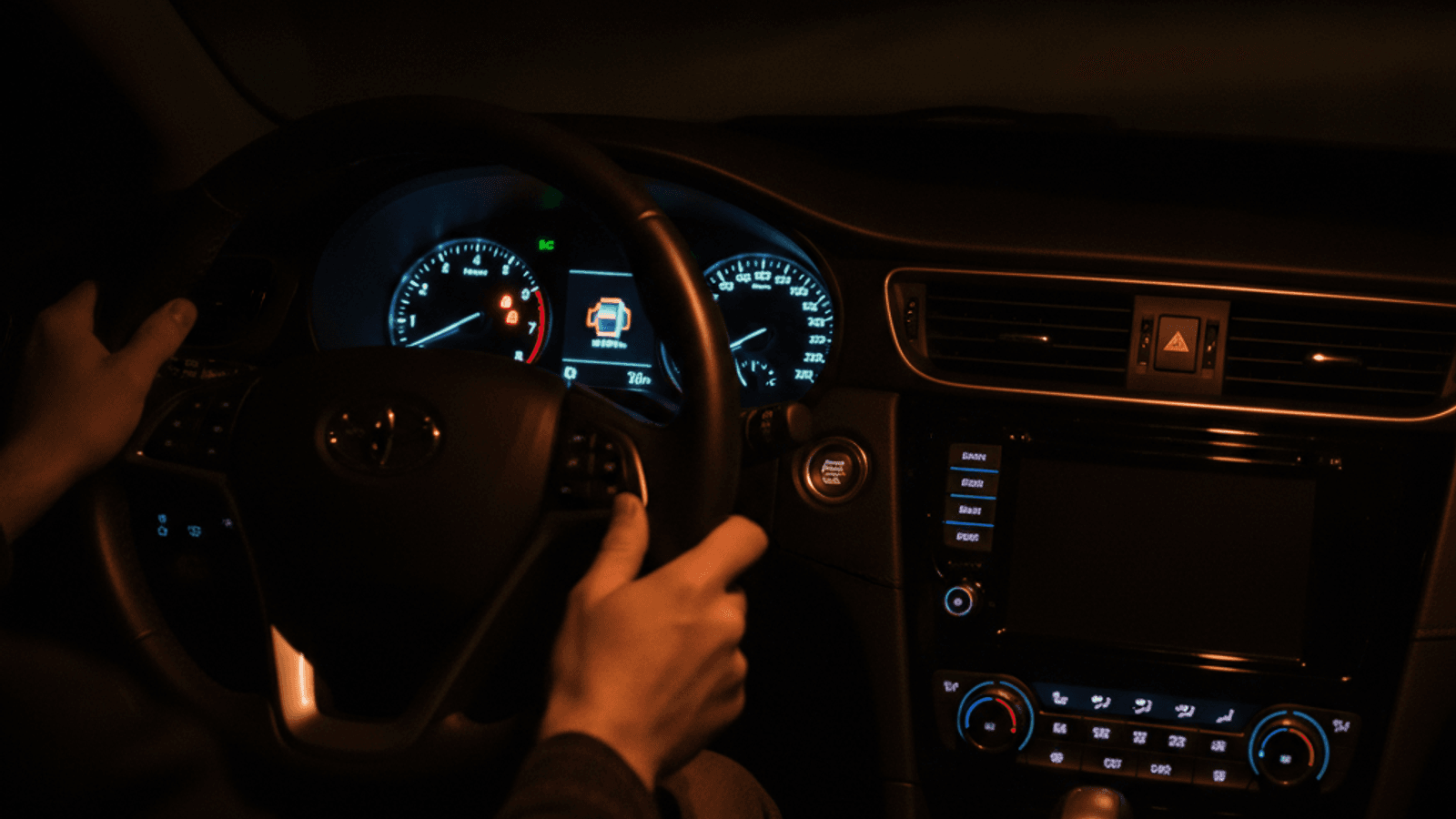
The light that covers hundreds of possible problems
The check engine light is the least specific warning on your dashboard, and that’s exactly what makes it stressful. A tire pressure light means check your tires. A check engine light could mean a $15 gas cap, a $150 sensor, or a $3,000 catalytic converter, and the light itself gives you no way to tell which one you’re looking at.
That ambiguity is why so many drivers either panic and rush to a shop for something minor, or ignore it entirely and end up driving for months with a real problem developing underneath the dashboard. Neither reaction is right, and the difference between them comes down to one detail most people don’t check: whether the light is solid or flashing.
Solid versus flashing: the distinction that actually matters
A solid check engine light means the onboard computer detected something outside normal parameters and wants it looked at, but it’s not signaling an emergency. Plenty of solid-light triggers are minor. A loose or failing gas cap is a genuinely common cause, since it breaks the seal in the evaporative emissions system and the computer flags it. Other frequent solid-light causes include an aging oxygen sensor, a mass airflow sensor reading incorrectly, or an ignition coil starting to fail. None of those need you to pull over immediately, though none of them should sit ignored indefinitely either.
A flashing check engine light is a different situation. That pattern usually indicates an active engine misfire severe enough that unburned fuel is reaching the catalytic converter, which can overheat and cause expensive damage if you keep driving on it. A flashing light is worth addressing quickly, not as a same-hour emergency in most cases, but soon, ideally within a day or two rather than weeks.
Why the $20 code reader only tells part of the story
Auto parts stores across Topeka will read your code for free, and that’s a genuinely useful first step. The problem is what that code actually tells you. A code like P0420, for example, points to catalytic converter efficiency below threshold. It does not tell you whether the actual cause is a failing converter, a bad oxygen sensor giving a false reading, an exhaust leak, or an engine running rich for an unrelated reason. Replacing the part named in the code without confirming the root cause is a common way to spend real money and still have the light come back on.
That confirmation step is what a proper diagnostic actually does. A shop offering real engine diagnostics pulls the code, then runs follow-up testing specific to that code, checking live sensor data, testing related components, and ruling out the cheaper explanations before pointing at the expensive one. That testing time is what the diagnostic fee covers, and it’s the difference between a guess and an actual repair plan.
What tends to trigger the light in Greater Topeka specifically
A few local patterns show up more than people expect. Spring storms across Tornado Alley bring hail and straight-line wind that can damage wiring harnesses, sensors mounted in the engine bay, or the battery and charging system, any of which can trip a code. A car that was fine before a bad storm and has a light on afterward is worth having checked with that context in mind, since storm-related electrical damage isn’t always visible from a quick look under the hood.
Extreme temperature swings play a role too. A below-zero cold snap in January can reveal a marginal battery, wiring connection, or sensor that was borderline all along, and July heat in the 90s puts extra strain on cooling and emissions systems that a milder climate wouldn’t stress the same way. If your light came on right after the first hard freeze or during a stretch of 90-degree days, that timing is worth mentioning to whoever is diagnosing it.
Gravel and county-road driving out toward Jackson or Osage County can also work connectors and wiring loose over time in a way pure city driving doesn’t, which occasionally shows up as an intermittent code that’s hard to reproduce on a smooth test drive. A good diagnostic accounts for that by checking connections physically, not just reading live data once and calling it done.
Buying a used car with the light already on
If you’re looking at a used car and the check engine light is on, or the seller mentions it “just needs a sensor,” don’t take that secondhand diagnosis at face value. Get it scanned yourself, or better, have it looked at as part of a broader pre-purchase inspection that checks for both the active code and anything that might have been cleared right before you looked at the car. A cleared code doesn’t mean a fixed problem; it often just means the light will come back within a few days of driving.
The cost of ignoring it versus the cost of checking it
A solid check engine light rarely needs to be treated as an emergency, but it also isn’t something to let sit for months. Small problems that trigger a light, a failing sensor, a loose connection, tend to get more expensive the longer they run unaddressed, since the engine computer often compensates in ways that add strain elsewhere. A diagnostic that costs somewhere in the range of $80 to $150 is a lot cheaper than the fuel economy losses and secondary damage that can build up over a year of driving with an ignored light.
What a shop should tell you after the scan
A diagnostic visit should end with more than a part number. A shop worth returning to explains what code triggered the light, what testing confirmed the actual cause, and what happens if you delay the repair versus handling it now. That last part matters more than it sounds. Some issues, a failing oxygen sensor, for instance, mostly cost you fuel economy if you wait. Others, like an active misfire behind a flashing light, get measurably more expensive the longer you drive on them because of the damage they do to the catalytic converter along the way. Ask directly what happens if you wait, and treat a vague answer as a reason to get a second opinion.
Before a long highway trip out of the metro
If your light comes on right before a planned drive out on I-70 toward Kansas City or Salina, or any longer trip away from home, it’s worth getting scanned before you leave rather than hoping it holds. A minor issue that’s manageable during a local commute around Topeka can turn into a bigger problem on a long highway stretch, where the engine runs under sustained load for hours instead of the shorter, lower-stress trips most city driving involves. A quick pre-trip scan is a cheap way to find out whether you’re dealing with something that can wait until you’re back or something worth addressing first.
What should I do the moment my check engine light comes on?
Check whether it’s solid or flashing first. A flashing light means get it looked at soon, ideally within a day or two. A solid light means drive normally but don’t ignore it, and get it scanned within the next week or so, especially if you notice any change in how the car runs.
Can a loose gas cap really cause a check engine light in Kansas?
Yes, and it’s genuinely common. The gas cap seals the evaporative emissions system, and a loose, cracked, or missing cap breaks that seal, which the computer detects as a fault. Tightening the cap and driving for a day or two sometimes clears it on its own, though a shop can confirm that’s actually the cause rather than a coincidence.
Why did my check engine light come on right after a hailstorm?
Hail and wind damage from a Tornado Alley storm can affect wiring, sensors, or the battery and charging system in ways that aren’t always visible from outside the car. If the light appeared right after a storm, it’s worth mentioning that timing when getting it diagnosed.
Is it safe to keep driving with the check engine light on?
For a solid light, usually yes for the short term, though it’s worth getting scanned soon rather than indefinitely. For a flashing light, it’s safer to limit driving and get it looked at promptly, since that pattern typically means an active misfire that can damage the catalytic converter the longer you drive on it.
A check engine light isn’t a reason to panic, but it isn’t something to guess at either. Topeka Auto Pro connects Greater Topeka drivers with local shops that pull the actual codes and confirm the real cause before recommending a repair. Call (785) 000-0000 and we’ll point you toward a shop that can take a look.