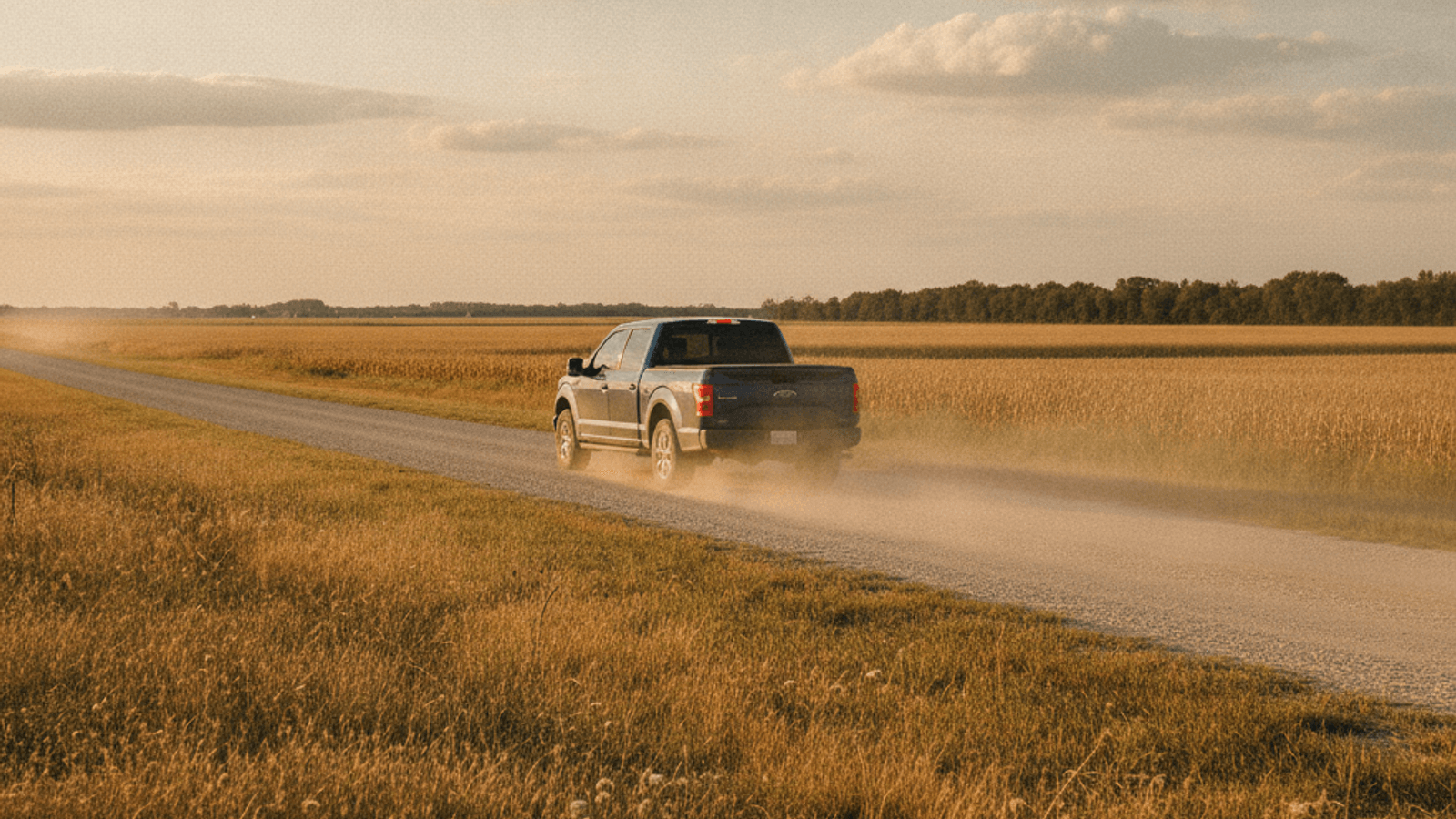
Two cars, same mileage, very different wear
Picture two vehicles with the exact same odometer reading, 60,000 miles each. One spent most of that mileage commuting smooth pavement between Southwest Topeka and downtown. The other spent a good chunk of it on gravel and county roads out toward Alma, Eskridge, or the rural stretches of Osage County. On paper, they’ve driven the same distance. Underneath, their suspension components are nowhere close to the same condition.
That gap is real, measurable, and worth understanding if you drive rural Kansas roads regularly, because it changes how often you should actually be inspecting the parts that keep your car controlled and your tires wearing evenly.
What gravel and washboard roads actually do to a suspension
Smooth highway pavement delivers a relatively steady, low-frequency load to shocks, struts, and bushings. Gravel roads are a different kind of stress entirely. Washboard ripples, potholes hidden under loose gravel, and the general unevenness of an unpaved surface deliver constant, sharp, high-frequency impacts. Shocks and struts are designed to absorb that kind of impact, but they wear out faster doing it repeatedly than they would soaking up the gentler bumps of a well-maintained highway.
Ball joints, tie rod ends, and control arm bushings take a similar beating. These components are built with a certain amount of designed-in play to allow movement, and repeated sharp jolts accelerate the wear that eventually turns that play into looseness you can feel through the steering wheel. A car that’s driven mostly smooth city streets in Westboro or Potwin can go years without needing attention in this area. A car doing regular miles on Jackson, Osage, or Wabaunsee county gravel roads sees that same wear compressed into a fraction of the time.
The wear you can feel, and the wear you can’t
Some suspension wear announces itself. A rough, bouncy ride, a clunk over bumps, or a steering wheel that feels loose or wanders slightly on a straight road are all signs worth acting on. But a meaningful amount of gravel-road wear develops gradually enough that a driver adjusts to it without noticing, since the change happens over months rather than overnight.
That’s where uneven tire wear becomes a useful early warning sign, even before you feel anything through the wheel. Cupping, scalloping, or wear concentrated on one edge of a tire often traces back to a worn shock, strut, or suspension bushing rather than an alignment problem alone. A shop doing real suspension and steering work checks for this pattern specifically, since it’s often the first physical evidence of wear that hasn’t yet produced a noticeable ride change.
Why this connects directly to alignment, too
Suspension and alignment are related but not identical, and gravel-road driving affects both. Worn suspension components can throw off an alignment that was previously correct, since components with excess play don’t hold their intended position under load the way new parts do. That means a car that gets a straightforward wheel alignment without checking suspension condition first might hold that alignment for a much shorter time than expected, especially if it’s headed back out onto rough roads immediately afterward. A shop that checks suspension components before an alignment, rather than after problems show up, is doing the job in the right order.
Farm trucks, tow vehicles, and the load multiplier
Rural Kansas driving often comes with a second factor beyond the road surface itself: load. A truck hauling a trailer to Perry Lake on the weekend, or a genuine farm or ranch vehicle running loaded across Osage or Wabaunsee County during the week, adds weight that increases the force behind every gravel-road impact. Heavier loads compress shocks and struts further with each bump, which accelerates the same wear pattern that gravel alone produces, just faster.
If your vehicle regularly combines rural gravel miles with towing or hauling, that’s a real reason to inspect suspension components more often than the standard mileage-based schedule assumes, not an excuse to skip it because “it’s just a truck.” Worn shocks under load don’t just ride roughly, they measurably increase stopping distance and reduce control, which matters on wet or icy roads especially.
What an honest inspection actually looks like
A proper suspension inspection means physically checking shocks and struts for leaks, wear, or damage, checking control arms, ball joints, tie rods, and bushings for excess play, and looking at tire wear patterns for evidence of a problem that hasn’t yet shown up as a rough ride. It should end with a clear explanation of what’s actually worn versus what’s still within spec, not a blanket recommendation to replace everything at once.
A realistic inspection interval for rural driving
There’s no single universal number, but a car seeing regular gravel and county-road miles reasonably benefits from a suspension check on roughly half the interval a purely city-driven car would use. If a smooth-road commuter car gets by with a suspension check every couple of years absent symptoms, a rural gravel-road vehicle covering similar mileage is often due for a look annually, especially if it also tows or hauls regularly.
What repair costs actually look like once wear is confirmed
Suspension repair pricing spans a wide range because the components involved vary so much in cost, and it’s worth understanding roughly where a given repair falls before agreeing to it. A single worn component, one strut or a set of bushings, tends to land toward the lower end of a $150 to $700 range. A repair involving multiple components on both sides of the vehicle, which is common once wear has been building for a while on a gravel-road vehicle, runs toward the higher end. Ask specifically which components your quote covers and whether the wear was found on one side or both, since that’s usually what separates a smaller repair from a larger one.
Why this matters more for I-70 and Wanamaker corridor commuters than it seems
It’s tempting to assume suspension wear from rough roads is purely a rural, gravel-road issue, but heavy stop-and-go traffic on routes like the Wanamaker corridor and the daily grind of the I-70 approach into Topeka wear suspension components in a related way, through constant braking and acceleration cycles rather than sharp gravel impacts. A car doing both, a rural commute into a stop-and-go city corridor, sees a combined wear pattern that’s worth mentioning specifically when you bring it in, since it affects how often a shop should reasonably expect to find something worth addressing. Mentioning your actual daily route, not just your total mileage, gives a shop a much better sense of what to look for than the odometer alone ever could.
Does driving on gravel roads actually damage a car’s suspension faster than city driving?
Yes, measurably. The constant, sharp impacts from washboard and uneven gravel surfaces wear shocks, struts, and suspension bushings faster than the steadier load of smooth highway driving, even at the same total mileage.
How can I tell if it’s my suspension or my alignment causing a problem?
A rough or bouncy ride, clunking over bumps, or visible fluid leaks on a shock or strut point toward suspension. A car that pulls to one side on a smooth road with an otherwise comfortable ride points more toward alignment. Since worn suspension parts can also throw off an alignment, a proper inspection checks both rather than assuming one or the other.
Should I get my suspension checked more often if I tow a trailer on gravel roads?
Yes. Towing adds load that increases the force behind every gravel-road impact, which accelerates wear on shocks and struts beyond what gravel driving alone produces. A shorter inspection interval than the standard schedule is a reasonable adjustment for regular towing on rural roads.
What are the early warning signs of suspension wear before the ride gets noticeably rough?
Uneven or cupped tire wear is often the earliest sign, showing up before a driver notices a change in ride quality. Catching that pattern during a routine tire check can flag a suspension issue well before it becomes a rough, bouncy ride you can feel every time you drive.
If your vehicle sees regular gravel or county-road miles, a suspension check on a shorter interval than the standard schedule is worth doing before something starts to feel loose. Topeka Auto Pro connects Greater Topeka drivers with local shops that inspect shocks, struts, and steering components properly. Call (785) 000-0000 and we’ll point you toward one nearby.