The sound everyone hears on the first cold morning
You back out of the driveway in January, tap the brakes at the stop sign, and hear a sharp squeal that wasn’t there yesterday. By the time you’re on Wanamaker or heading toward I-70, the noise is gone. It happens again the next cold morning, and the one after that.
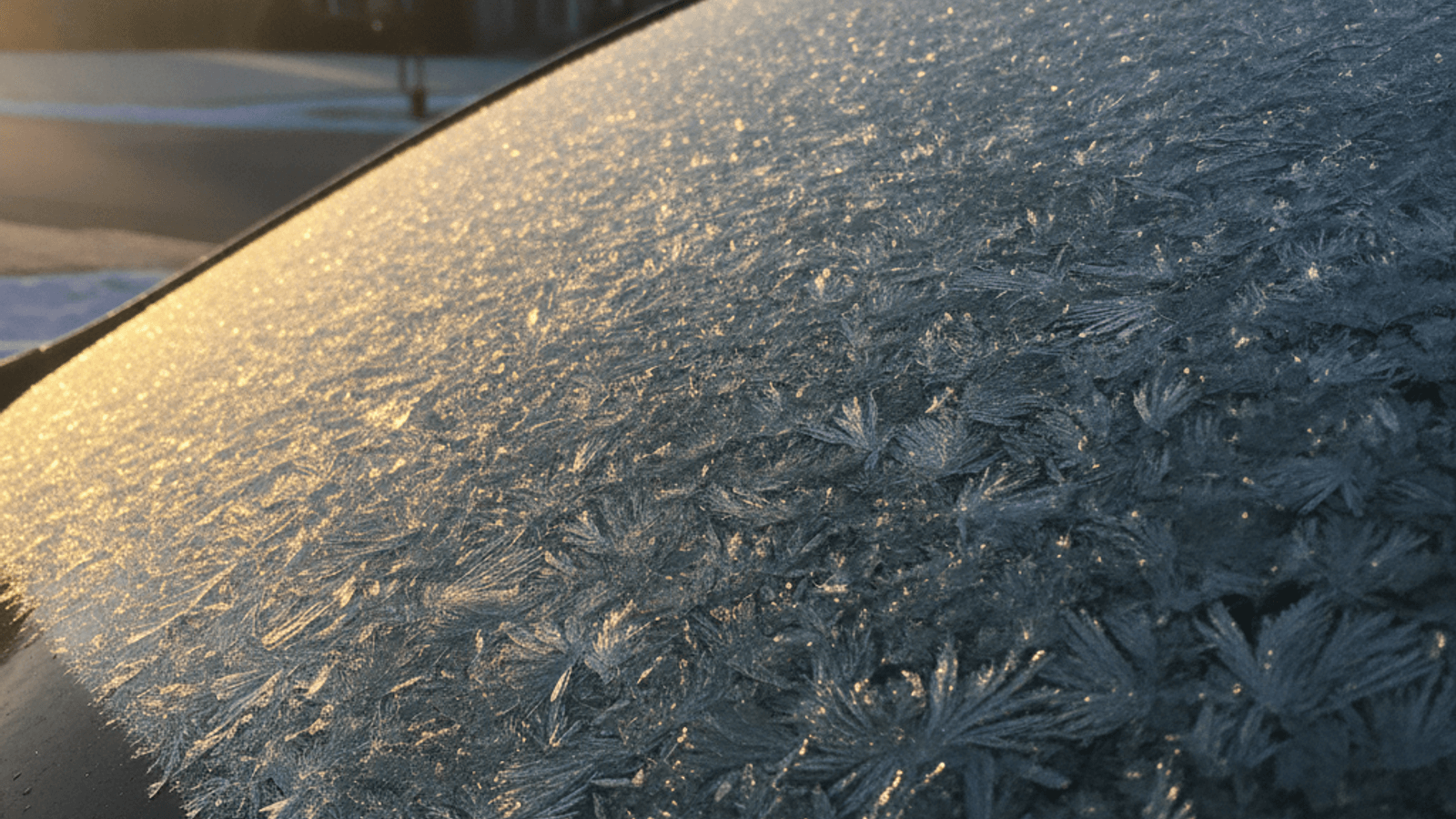
That pattern is one of the most common brake questions Topeka drivers ask, and most of the time it has a boring answer. Cold, humid air sits on exposed metal rotors overnight and forms a thin layer of surface rust. The first few brake applications scrape that rust off, and the noise disappears. It’s louder in fall and winter because Kansas nights get cold enough for condensation to form, and it’s worse after rain, an ice storm, or a stretch of humid days followed by a hard freeze.
Surface rust squeal has a few tells. It shows up mostly on the first stop or two of the day. It fades within a few blocks of driving. It doesn’t come with grinding, pulling, or a soft pedal. And it tends to get more noticeable the longer a car sits, which is why it’s worse after an overnight freeze than after a quick errand.
When the squeal means something else
Not every squeal is harmless, and the difference matters enough to check rather than assume. A few signs point to an actual problem instead of overnight rust.
If the squeal doesn’t fade after normal driving and shows up on every stop, all day, that’s usually a wear indicator doing its job. Most brake pads have a small metal tab built in that contacts the rotor once the pad wears down to a certain thickness. That’s a deliberate warning sound, not a seasonal one, and it means the pads need attention soon rather than eventually.
Grinding is a different signal entirely. A metal-on-metal grinding sound means the pad material is gone and the backing plate is contacting the rotor directly, which damages the rotor and reduces stopping power. That’s not a wait-and-see situation.
A pedal that feels soft or sinks slightly toward the floor, a car that pulls to one side under braking, or a pulsing sensation through the pedal at highway speed are all signs worth having looked at, separate from any noise at all. These point toward warped rotors, air in the brake lines, or uneven pad wear rather than simple cold-weather surface rust.
What actually happens during a proper brake inspection
A shop that knows what it’s doing doesn’t start by quoting a brake job. It starts by measuring. That means pulling the wheels, checking pad thickness against the minimum spec for your vehicle, and inspecting the rotor surface for grooving, rust pitting, or uneven wear. If the pads have plenty of material left and the rotors are smooth, the fix might be nothing more than a good cleaning and a recommendation to keep an eye on it. If the pads are thin or the rotors are scored, that’s a different conversation, and it should come with a written explanation of what was actually found.
This is where the brake repair side of things matters more than people expect. A rotor that’s been driven on too long with worn pads can develop grooves deep enough that resurfacing isn’t an option, which turns a pad-only job into a pad-and-rotor job. Catching a thin pad early, before it scores the rotor, is genuinely the cheaper outcome, not a sales pitch dressed up as one.
Why Kansas winters are harder on brake hardware than people think
It isn’t just the cold. Road treatment during ice events, stop-and-go traffic during a slick commute, and the freeze-thaw cycle that Topeka goes through repeatedly between November and March all add up. Salt and grit accelerate rust on calipers, slide pins, and rotor edges, and hardware that’s already a little stiff from age can seize up faster once winter grime gets into it. A caliper slide pin that’s dragging even slightly will wear one pad faster than the other and can cause a persistent squeal that has nothing to do with morning dew.
Drivers doing a lot of short trips around Central Topeka or Westboro in the winter, where the brakes barely get warm before the car is parked again, tend to see this surface rust pattern more than drivers who put in longer highway stretches on I-70. The short-trip pattern doesn’t wear brakes out faster in general, but it does mean the rust has less chance to scrub off between cold mornings.
If a car sees regular gravel or county-road miles out toward Auburn, Berryton, or the Wabaunsee County line, dust and grit work into the brake hardware in a way city driving doesn’t produce, and that’s worth mentioning to a shop even if the current complaint is just noise. Related wear on the suspension and steering side often shows up around the same time on vehicles that see a lot of rural miles, so a shop looking at brakes on one of these cars usually checks the front end while it’s already up.
A reasonable habit, not a sales pitch
A pre-winter brake check isn’t necessary for every car every year, but if your brakes are getting close to a service interval, doing that check before the first hard freeze rather than after makes sense. It’s a lot easier to replace pads on your own schedule in October than to deal with a grinding noise during an ice storm in January.
What a repair actually costs once it’s confirmed
If an inspection does turn up pads or rotors that genuinely need replacing, it helps to know roughly what a fair job costs before you’re standing at the counter reacting to a number. A straightforward pad replacement on one axle tends to land toward the lower end of a $150 to $600 range, while a job that includes rotors on both axles runs toward the higher end. The spread exists because rotors add real parts and labor cost, not because shops are picking a number out of the air, so ask specifically whether your quote includes rotors or pads alone. A shop that explains which side of that range your car falls on, and why, is giving you something you can actually check against a second opinion if you want one.
If you’re outside Topeka proper
A lot of the Topeka metro doesn’t have a shop on every corner the way Central Topeka does. If you’re out toward Auburn, Berryton, or further into rural Osage or Wabaunsee County, the nearest realistic option might be a small-town Main Street shop rather than a chain storefront, and that’s not a downgrade. Independent shops in towns like Alma or Overbrook often know the local roads and the kind of wear pattern gravel driving produces better than a shop that only ever sees city traffic. The same inspection standard applies either way: pad and rotor measurements before a recommendation, not a guess based on mileage alone.
Is it normal for brakes to squeal every cold morning in winter?
Occasional squealing on the first stop of a cold, damp morning is common and usually harmless, caused by a thin layer of surface rust on the rotor. If it fades within a block or two of driving and doesn’t return the rest of the day, it’s not typically a sign of a bigger problem.
How can I tell the difference between rust squeal and a wear indicator?
Rust squeal fades quickly once you start driving and only shows up after the car has sat, especially overnight. A wear indicator squeal is more consistent, showing up on nearly every stop throughout the day regardless of temperature or how long the car sat.
Does driving on Kansas gravel roads wear brakes down faster?
Dust and debris from gravel and county roads can work into calipers and hardware over time, which sometimes causes uneven pad wear or a dragging slide pin. It’s not the same as normal pad wear from mileage, but it’s worth mentioning if you drive rural roads regularly and notice a persistent noise.
Should I be worried if the squeal comes with a pulling sensation?
Yes, that combination is worth having checked rather than waiting out. A pull under braking along with noise points toward something mechanical, like uneven pad wear or a sticking caliper, rather than the seasonal surface rust that clears up on its own.
If your brakes are doing something that doesn’t match the harmless cold-morning pattern, it’s worth getting a real inspection rather than guessing. Topeka Auto Pro connects Greater Topeka drivers with local shops that measure pads and rotors before recommending any work. Call (785) 000-0000 and we’ll point you toward a shop that can take a look.