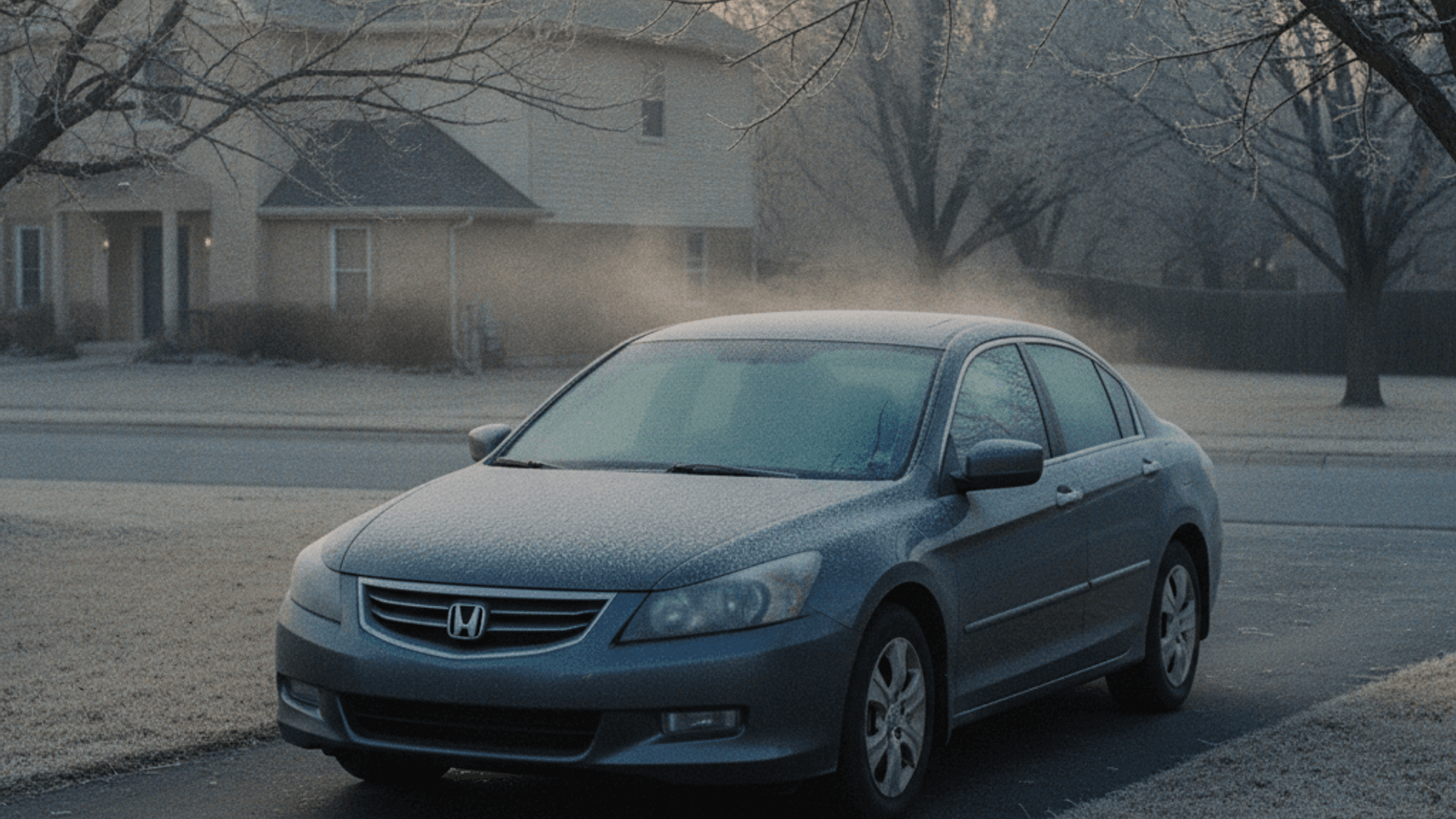
Why “before the freeze” matters more than “sometime in winter”
There’s a specific window that matters more than people realize: the stretch of a few weeks before the first hard freeze of the season actually hits Greater Topeka. A battery, hose, or set of wiper blades that’s marginal in October is often fine on a 50-degree morning and completely dead on the first 15-degree morning in December. Waiting until the cold actually arrives to find out what’s weak means finding out the hard way, usually stranded in a parking lot or on the shoulder somewhere along US-75.
A pre-freeze check isn’t about replacing things preemptively that don’t need it. It’s about testing the parts that fail predictably in cold weather while there’s still time to fix them on your schedule instead of a tow truck’s.
Battery: the single most predictable winter failure
Cold is genuinely hard on car batteries in a way that’s measurable, not just a feeling. A battery that’s already weakened by age delivers noticeably less cranking power in cold temperatures than it does in summer, because the chemical reaction inside the battery slows down as it gets colder, right when the engine needs the most current to start. A battery that’s been marginal all year, starting a little slower than it used to, often shows its first real failure on the season’s first hard freeze rather than gradually.
A load test tells you where a battery actually stands instead of guessing by age. Most batteries last 3 to 5 years, but Kansas summers in the 90s and winters near 18 degrees both shorten that lifespan faster than a milder climate would, so age alone isn’t a reliable guide. If your battery is three years or older, a load test before winter is worth the ten minutes it takes. Battery and charging system work falls under battery and electrical service, and a proper check includes the alternator too, since a healthy battery paired with a weak alternator will still leave you stranded.
Antifreeze: checked, not just topped off
Coolant, often called antifreeze, does exactly what the name suggests: it keeps the fluid in your engine from freezing in cold weather and from boiling over in summer heat. The concentration matters as much as the level. Coolant that’s been diluted with too much water, sometimes from a previous top-off with plain water instead of the correct mix, won’t protect against freezing as well as it should, even if the reservoir looks full.
A proper check tests the actual freeze protection level, not just whether there’s fluid in the reservoir. This is a case where “topped off” and “protected” aren’t the same thing, and it’s a cheap check to skip on a car that’s due.
Tires: tread depth is a winter safety number, not just a mileage number
Tread depth matters year-round, but it matters differently in winter. Worn tread reduces a tire’s ability to channel water and slush away from the contact patch, which increases stopping distance and reduces grip exactly when ice and packed snow make grip the most important thing your car has. A tire that was fine for a dry summer commute around Central Topeka can be genuinely unsafe on an icy morning if it’s close to the wear bar.
Check tread depth, not just tire age, before winter arrives. If you’re deciding between sticking with your current tires or making a change, that decision deserves its own look at tire service options sized to how much winter and rural driving you actually do, since the right answer isn’t the same for a Central Topeka commuter as it is for someone driving Wabaunsee County gravel roads daily.
Wiper blades: cheap, easy to ignore, genuinely dangerous when worn
Kansas winter weather isn’t mostly heavy snow. It’s ice storms, freezing drizzle, and the kind of low-visibility mess that makes a functioning windshield the difference between a normal commute and a dangerous one. Worn wiper blades streak and skip exactly when you need a clear windshield most, during freezing rain or the first flurries of a storm.
Wiper blades are inexpensive and easy to check yourself: run them dry for a second and look for streaking, skipping, or a blade edge that’s cracked or torn. If they’re already marginal in October, they’ll be worse once the rubber gets stiff from real cold.
Heater and defroster: don’t wait for the first freeze to find out
A weak heater is mostly a comfort problem until you consider the defroster, which shares the same heating system and matters a great deal during an actual ice storm when a clear windshield is a safety issue, not a comfort one. If your heater has been slow to warm up or the defroster takes too long to clear the glass, that’s worth checking before winter rather than during it. Heating problems fall under the same AC and heating repair service that covers summer AC issues, and a shop checking one side of that system before a seasonal extreme is a reasonable habit either direction.
The five-item list, in order of how often they actually cause a winter breakdown
Realistically, in order of frequency: a weak battery causes the most winter breakdowns by a wide margin, followed by tires with worn tread on an icy morning, then coolant that’s under-protected against freezing, then a heater or defroster that leaves you driving with a fogged or frosted windshield, and finally wiper blades that fail exactly when a storm makes visibility the whole ballgame. Checking all five before the season’s first hard freeze covers the predictable failures, not the rare ones.
Ice storms, not snow totals, are the disruptive event here
It’s worth being specific about what Kansas winter actually throws at drivers, because it shapes which prep items matter most. Topeka doesn’t typically deal with the kind of multi-foot snow totals some northern states plan around. The more disruptive event here is ice, freezing rain and drizzle that coats roads, power lines, and windshields with a layer that’s far more dangerous per inch than the same depth of snow would be. That’s exactly why the heater, defroster, and wiper blades carry more weight in a Kansas winter prep list than they might in a state where the bigger concern is plowing through heavy snowfall. A car that handles snow fine but has a weak defroster is genuinely more exposed during a Topeka ice event than the reverse.
A pre-freeze visit is also the cheapest time to catch something else
Since a car is already up on a lift or getting a battery load test, it’s a reasonable moment to have a shop take a quick look at brakes and tires too, especially if either is due soon anyway. Combining a pre-winter check with routine scheduled maintenance means one visit covers more ground instead of making three separate trips across a few months. If you’re not near a big shop, this is also where a small-town option in Holton, Alma, or Osage City can be genuinely convenient, since a straightforward battery and fluid check doesn’t require specialized equipment a smaller independent shop wouldn’t have.
How early should I get my car checked before Kansas winter arrives?
Late September through October is a reasonable window, before overnight temperatures start regularly dropping into the 30s and 40s. That gives enough time to order parts or schedule a repair without doing it during an actual cold snap.
Is a battery load test really necessary if my battery still starts the car fine in fall?
A battery can start a car reliably at 50 degrees and fail at 15 degrees, since cold reduces available cranking power. A load test measures actual capacity rather than relying on the fact that it worked last week, which is why testing before the cold arrives catches problems a simple visual check misses.
Does antifreeze go bad or lose effectiveness over time?
Yes, coolant’s freeze protection and corrosion inhibitors both degrade over years of use, and dilution from a plain-water top-off can weaken the mix even sooner. A proper check tests the actual protection level rather than just confirming the reservoir is full.
What’s the most common reason Kansas drivers get stranded in winter?
A weak or dying battery is by far the most common cause, since cold weather exposes a marginal battery that was getting by fine in warmer months. A load test before the season’s first hard freeze is the single highest-value item on a pre-winter checklist.
Getting ahead of winter is a lot cheaper than dealing with a dead battery or a fogged windshield during an actual ice storm. Topeka Auto Pro connects Greater Topeka drivers with local shops that run a real pre-winter check, not just a quick look. Call (785) 000-0000 and we’ll point you toward one nearby.