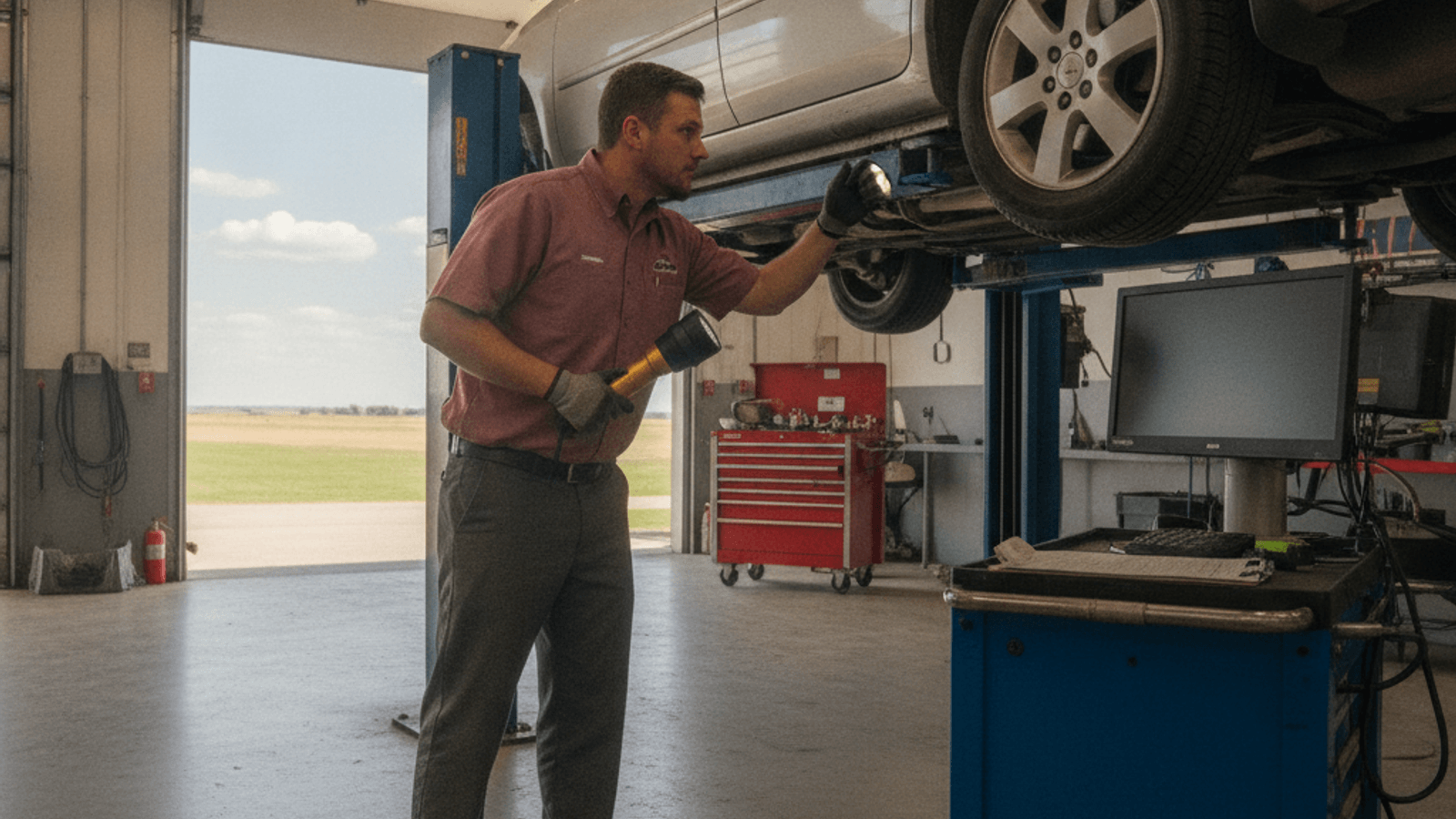
What a walkaround doesn’t tell you
A dealership walkaround, or a private seller standing next to their car answering questions, tells you how the vehicle looks and how it seemed to run for the five minutes you were paying attention. It doesn’t tell you what’s happening under the car, inside the transmission, or in the engine computer’s stored code history. A seller isn’t obligated to volunteer any of that, whether they’re a dealership or a private individual, and a car that looks clean on the lot can still be hiding something expensive.
An independent pre-purchase inspection is the only reliable way to see past the surface before you’ve committed money. Here’s what it actually covers, and why each piece matters.
Engine, transmission, and drivetrain
This is the core of the inspection and the part with the highest financial stakes. A thorough check looks at engine compression, oil condition and level, visible leaks, and unusual noises at idle and under load. On the transmission side, it checks fluid condition and level, and looks for slipping or rough shifting during a test drive, the same signs that separate a simple fluid issue from a bigger problem in any transmission repair diagnosis. Drivetrain components get checked for play, unusual noise, and leaks at seals and joints.
A seller’s casual assurance that “it runs great” isn’t the same as a technician confirming compression numbers and checking for metal in the transmission fluid. Those are two very different levels of confidence.
Frame damage, prior accident repair, and flood history
This is the category a walkaround is least equipped to catch, since accident repair can be done well enough to look invisible from a normal glance and flood damage can be cleaned up cosmetically while leaving corrosion and electrical problems that show up months later. An inspection checks for uneven panel gaps, mismatched paint under trim panels, evidence of frame straightening, and signs of water intrusion like rust in unusual locations, a musty smell, or corrosion on electrical connectors that wouldn’t be there on a car with a clean history.
Kansas sees genuine flood risk from heavy spring storms, and a car with flood history doesn’t always come from a Kansas flood specifically; damaged vehicles move across state lines through auction all the time. A VIN history report is a reasonable first check, but it only reflects what’s been reported, not everything that actually happened to a car, which is exactly why a physical inspection matters even after a clean report.
Brakes, suspension, steering, and tires
These are the systems most directly tied to safety, and they’re checked the same way they’d be checked for a repair diagnosis: measuring pad thickness and rotor condition for brake repair concerns, inspecting shocks, struts, and steering components for wear or play, and checking tire tread depth and wear patterns. Uneven tire wear is a particularly useful clue during a pre-purchase inspection, since it can reveal a suspension or alignment issue the seller either doesn’t know about or didn’t mention.
Scanning for trouble codes, including cleared ones
A scan tool check does two things a casual test drive can’t. It reads any currently active codes, and it can often reveal codes that were recently cleared, which matters because clearing a code right before a sale is a way some sellers make a check-engine light disappear temporarily without actually fixing whatever triggered it. A car that seems to run fine during a short test drive can still have an active problem that just hasn’t retriggered the light yet.
Why an independent shop matters more than the seller’s recommendation
If a dealer or private seller offers to have “their guy” look at the car for you, that inspection has a built-in conflict of interest, even if the mechanic involved is perfectly honest. You want an inspection from a shop with no stake in whether the sale happens. Bringing the car to your own choice of shop for a real pre-purchase inspection, rather than accepting the seller’s recommendation, is a small step that protects you specifically.
What it means if a seller says no
A seller confident in a car’s condition generally has no reason to refuse a buyer’s request for an independent inspection. If a seller pushes back hard, makes it difficult to schedule, or tries to rush you into deciding before there’s time to get one done, that reaction is itself worth paying attention to. It doesn’t automatically mean something is wrong with the car, but it’s a reasonable reason to slow down.
What it costs versus what it protects
A thorough pre-purchase inspection typically runs $100 to $200 and takes one to two hours. Compared against the cost of an unexpected transmission or engine repair right after a purchase, which can easily run into the thousands, it’s one of the clearest cases where a small upfront cost protects a much larger one. It’s also a genuine negotiating tool: a written inspection report gives you specific, documented issues to raise with the seller, whether you’re asking for a price reduction or walking away entirely.
Storm damage is a specific Kansas risk worth naming directly
Tornado Alley severe weather adds a wrinkle that buyers in milder climates don’t have to think about as much. Hail can dent body panels and crack windshields in ways that are sometimes repaired cosmetically without addressing underlying issues, and straight-line wind events can damage wiring or sensors in the engine bay. A car that changed hands recently after a major regional storm is worth asking direct questions about, and an inspection that includes a careful look at the engine bay wiring and a full diagnostic scan is the way to actually verify the answer instead of taking a seller’s word for it.
What to do with the inspection report once you have it
A written inspection report is only useful if you actually use it. If it comes back clean, that’s genuine peace of mind worth the cost on its own. If it turns up issues, separate them into two categories: things worth negotiating the price over, and things serious enough to walk away from entirely. A failing transmission or evidence of frame damage generally falls into the second category regardless of how much the price drops, since some problems aren’t worth taking on even at a discount. Smaller issues, worn brake pads or tires nearing replacement, are more reasonably treated as a negotiating point, since you already know roughly what they’ll cost to address through routine brake repair or tire service once the car is yours.
Buying from out of town or sight unseen
If you’re considering a car listed outside the immediate Topeka area, a private-party listing you found online rather than something local, an independent inspection matters even more. You can’t rely on a quick in-person look to catch anything, and a seller you’ve never met has no established local reputation to weigh. Arranging an inspection through a shop near the car’s location before you drive out to see it, or before you wire any money, is a reasonable step even if it means a little extra coordination.
How much does a pre-purchase inspection cost in the Topeka area?
A thorough independent inspection generally runs $100 to $200, typically taking one to two hours to complete. That’s a small cost relative to the risk of buying a used car with an undisclosed transmission, engine, or frame problem.
Can a cleared check engine light hide a real problem before I buy a used car?
Yes. Clearing a code temporarily turns off the warning light without fixing whatever caused it, and the light can take days of driving to reappear. A proper scan during a pre-purchase inspection can often detect codes that were recently cleared, not just ones currently active.
Should I trust a mechanic the seller or dealership recommends for my inspection?
It’s better not to rely on it exclusively. An inspection arranged by the seller has an inherent conflict of interest, regardless of the individual mechanic’s honesty. Bringing the car to your own independently chosen shop removes that conflict entirely.
What should I do if the seller refuses to allow an independent inspection?
Treat it as a real warning sign worth taking seriously, though not automatic proof of a problem. A seller confident in the car’s condition typically has no reason to refuse a buyer’s reasonable request for an independent, unbiased inspection before finalizing a purchase.
Before you hand over money for a used car, get an honest look at what’s actually under the hood and underneath it. Topeka Auto Pro connects Greater Topeka buyers with independent local shops for real pre-purchase inspections. Call (785) 000-0000 and we’ll point you toward one.